

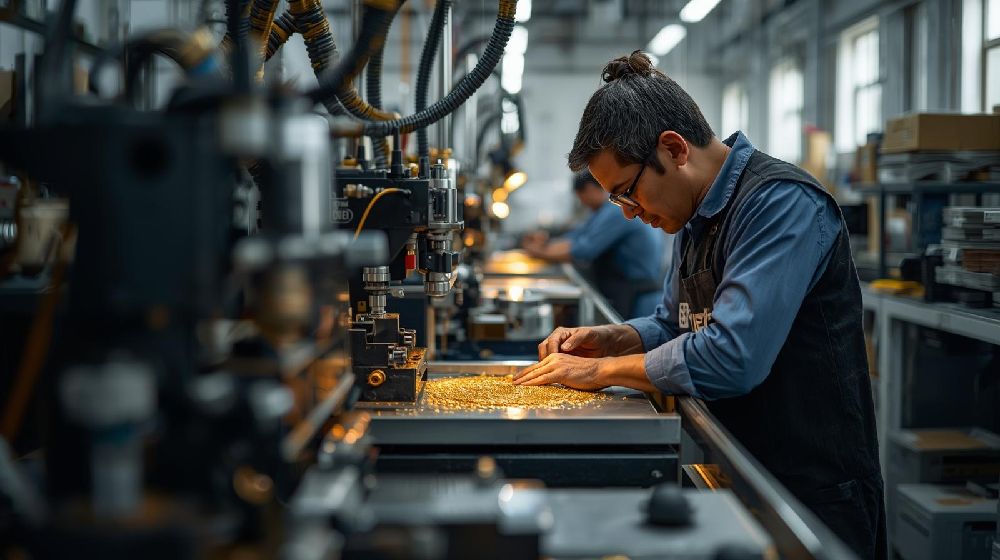
Gold has always symbolized value, luxury, and permanence. But in today’s world, value is measured not only by beauty and purity—but also by responsibility. As the jewelry industry evolves, efficient gold usage has become a key factor in supporting sustainable and ethical manufacturing practices.
Responsible manufacturing is no longer optional. Consumers, global markets, and regulatory bodies expect transparency, reduced waste, and environmentally conscious production. Efficient gold usage plays a central role in achieving these goals.
Understanding Responsible Gold Manufacturing
Responsible manufacturing in jewelry involves:
Minimizing material waste
Reducing environmental impact
Ensuring ethical sourcing
Optimizing energy consumption
Maintaining purity and quality standards
Gold is a precious and limited resource. Using it efficiently ensures that production meets demand without unnecessary extraction or waste.
Minimizing Gold Waste During Production
Gold is costly, and even small losses during production can have significant financial and environmental consequences. Efficient usage focuses on:
Precise CAD-based design planning
Optimized casting techniques
Accurate metal allocation
Controlled melting and refining processes
Modern technologies such as CNC machining and laser cutting reduce excess trimming and reshaping, helping manufacturers use every gram effectively.
Recycling and Refining Systems
Responsible manufacturers implement closed-loop systems where:
Gold dust from polishing is collected
Scrap pieces are re-melted
Filing residues are refined
Production leftovers are recycled
Advanced refining ensures recovered gold maintains its purity. This reduces the need for additional raw gold sourcing and supports sustainability goals.
Precision Through Technology
Technology has become a key driver of efficient gold usage. Tools such as:
Computer Numerical Control (CNC) machines
Laser welding systems
Automated weighing and measuring equipment
AI-assisted quality control
allow for micron-level accuracy. This precision prevents errors, reduces remakes, and eliminates material wastage.
Lean Manufacturing and Resource Optimization
Lean manufacturing principles align perfectly with responsible gold usage. By eliminating inefficiencies such as:
Overproduction
Rework due to defects
Excess inventory
Idle processing time
manufacturers can optimize gold consumption while maintaining high quality.
Efficient workflow management ensures that production is demand-driven rather than waste-driven.
Lightweight Engineering Without Compromising Strength
Modern design techniques allow manufacturers to create:
Hollow structures
Precision-balanced bangles
Lightweight rings
Structural reinforcement without excess material
Through engineering innovation, jewelry remains durable and luxurious while using less gold.
This approach benefits both manufacturers and customers—reducing cost while maintaining aesthetic appeal.
Supporting Ethical Sourcing
Efficient gold usage reduces dependency on newly mined gold. Since gold mining can have environmental and social impacts, minimizing unnecessary demand supports:
Reduced ecological disruption
Lower carbon emissions
Responsible supply chain practices
When manufacturers use gold carefully, they contribute to a more sustainable global industry.
Transparency and Consumer Trust
Today’s consumers are increasingly aware of sustainability issues. Brands that prioritize responsible gold usage can confidently communicate:
Waste reduction practices
Recycling initiatives
Precision manufacturing processes
Purity control measures
Transparency builds trust and strengthens brand reputation in competitive markets.
Economic and Environmental Benefits
Efficient gold usage delivers dual benefits:
Economic Advantages
Reduced production costs
Lower material losses
Improved profitability
Better inventory management
Environmental Advantages
Reduced mining demand
Lower waste generation
Decreased energy consumption
Improved sustainability standards
Responsible manufacturing balances profitability with environmental care.
The Role of Skilled Craftsmanship
Efficiency does not eliminate craftsmanship—it enhances it. Skilled artisans work alongside advanced machinery to:
Refine finishing details
Ensure structural integrity
Maintain design excellence
Human expertise ensures that efficiency never compromises artistry.
The Future of Responsible Gold Manufacturing
The future of gold jewelry production will increasingly rely on:
Data-driven material tracking
AI-based quality inspection
Smart refining systems
Sustainable sourcing certifications
As global standards evolve, responsible manufacturing will become the foundation of industry success.
Final Thoughts
Efficient gold usage is more than a cost-saving strategy—it is a commitment to responsible manufacturing. By reducing waste, embracing precision technology, and supporting ethical sourcing, jewelry manufacturers can protect both their business and the environment.
In a world where sustainability defines modern luxury, responsible gold usage ensures that beauty is created not only with excellence—but with integrity.