

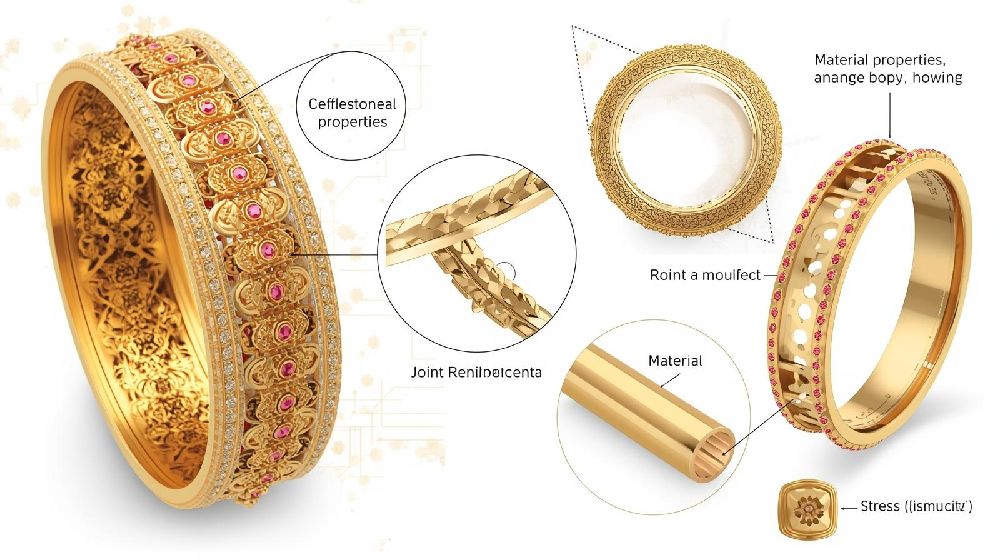
Gold bangles are timeless symbols of elegance, tradition, and personal style. Yet, anyone who has worn them knows that their beauty is only as good as their durability. Daily wear exposes bangles to pressure, friction, and accidental impacts. Without careful design, gold bangles can bend, warp, or lose their shape over time. This is where structural design plays a critical role in maintaining both aesthetics and longevity.
At DVN Jewelry, structural design is treated as a marriage of artistry and engineering—ensuring every bangle is as resilient as it is beautiful.
Understanding Deformation in Gold Jewelry
Gold is naturally soft and malleable, which makes it perfect for intricate designs but also vulnerable to deformation. Common causes of bangle bending include:
Accidental drops or knocks
Continuous squeezing or twisting
Pressure from stacking multiple bangles
Frequent exposure to environmental stress
Without a thoughtful internal structure, even a visually stunning bangle can lose its shape, compromising both appearance and comfort.
Key Structural Principles That Preserve Shape
Designing deformation-resistant gold bangles involves careful attention to geometry, thickness, and internal reinforcement.
1. Optimized Metal Thickness
Balancing comfort and strength is crucial.
Uniform thickness across the bangle prevents weak spots that can easily bend under stress.
2. Geometric Reinforcements
Subtle curves, ridges, or hollow sections can distribute stress evenly.
Circular, elliptical, or semi-circular cross-sections enhance resilience while preserving elegance.
3. Strategic Hollowing and Layering
Hollow designs reduce weight without compromising strength.
Layered construction adds internal support, ensuring the bangle maintains its original shape over time.
4. Stress Distribution in Openable Bangles
Hinged or openable designs incorporate locks and reinforced joints.
Precision engineering ensures even force distribution, preventing warping at the clasp or opening.
Material Selection and Alloy Considerations
Pure gold is soft, so most bangles are crafted in alloys that balance malleability with durability.
22K or 18K gold: Retains rich color while incorporating small amounts of copper, silver, or palladium for strength.
Micro-alloying techniques: Ensure bangles resist deformation without affecting shine or finish.
The combination of structural design and precise alloy selection ensures bangles withstand daily wear while maintaining luxurious aesthetics.
Craftsmanship and Quality Control
Even the most advanced structural design requires meticulous craftsmanship.
Artisans inspect each bangle for uniform thickness, smooth edges, and joint alignment.
Polishing is performed carefully to maintain both shine and structural integrity.
Rigorous quality checks ensure each bangle meets durability standards before it reaches customers.
This blend of design and craftsmanship is what makes gold bangles both beautiful and long-lasting.
DVN Jewelry’s Approach to Deformation-Resistant Bangles
At DVN Jewelry, every bangle is engineered with precision, durability, and elegance in mind. Our structural designs focus on:
Strengthening high-stress areas without compromising style
Optimizing geometry for comfort and wearability
Crafting bangles that retain shape for years, even with daily use
The result is jewelry that combines tradition, luxury, and resilience—perfect for modern lifestyles.
Conclusion: Beauty Meets Engineering
Structural design is more than a technical consideration—it is the foundation of lasting luxury. By carefully engineering gold bangles for durability, brands like DVN Jewelry ensure that their creations remain elegant, comfortable, and deformation-resistant, letting wearers enjoy their timeless beauty without compromise.