

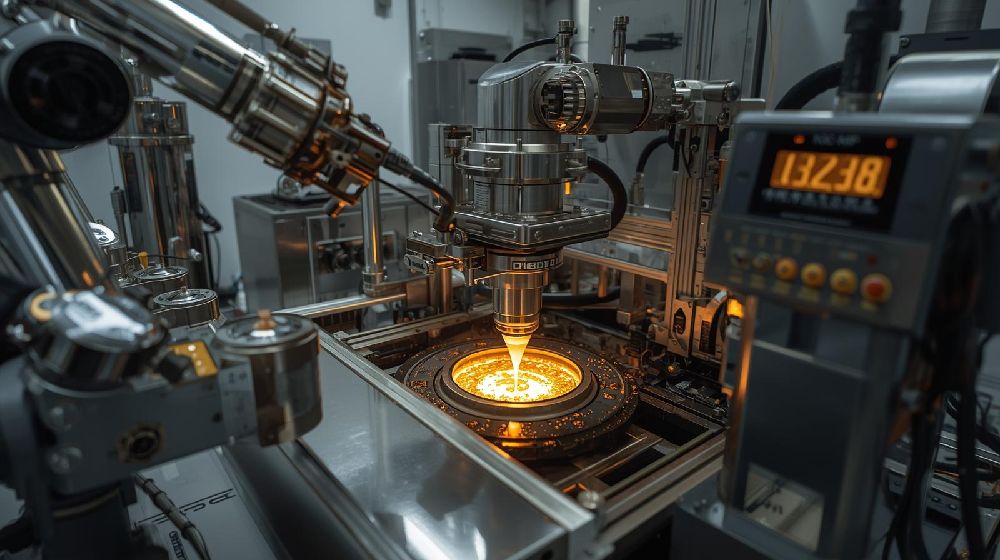
In gold jewelry manufacturing, purity and accuracy are non-negotiable. Even minor deviations in composition, weight, or dimensions can affect quality, value, and customer trust. As the industry scales and quality standards rise, automation has become essential in ensuring consistent gold purity and precise manufacturing across every piece.
Why Purity and Accuracy Matter in Gold Jewelry
Gold purity determines not only value but also durability, color, and wearability. Accuracy in weight and dimensions ensures fair pricing, comfort, and design consistency.
Manual processes alone, while skillful, are vulnerable to:
Human error
Inconsistent alloy mixing
Variations in weight and thickness
Automation minimizes these risks.
Automated Alloy Mixing for Precise Purity
Maintaining exact karat purity requires precise alloy ratios. Automated systems measure and blend gold with alloy metals using digitally controlled parameters.
Benefits include:
Exact karat consistency (18K, 22K, etc.)
Uniform color and hardness
Reduced material loss
This precision is difficult to achieve manually at scale.
Digital Weight and Dimension Control
Automated measuring tools and sensors monitor:
Weight at each production stage
Thickness and structural balance
Dimensional tolerances
Real-time data ensures every piece meets predefined specifications before moving forward.
CNC and Laser Technology for Structural Accuracy
CNC machines and laser welding systems execute designs with micron-level precision. These technologies:
Maintain uniform thickness
Create seamless joints
Preserve design integrity
Precision machining ensures accuracy without compromising strength.
Automated Quality Inspection Systems
Advanced inspection tools use optical scanners and AI-driven analysis to detect surface defects, inconsistencies, or deviations from design parameters.
This ensures:
Consistent finish quality
Early detection of defects
Reduced rework and wastage
Only pieces that meet strict quality benchmarks proceed to finishing.
Reducing Human Error While Empowering Craftsmanship
Automation handles repeatable, precision-critical tasks, allowing skilled artisans to focus on detailing, stone setting, and finishing. This balance improves quality while preserving craftsmanship.
Traceability and Documentation
Automated systems maintain digital records of:
Alloy composition
Weight history
Production stages
This traceability enhances transparency, audits, and compliance with hallmarking standards.
Building Customer Trust Through Precision
When automation ensures purity and accuracy, customers receive jewelry that matches its promise—exact weight, certified purity, and consistent quality. This reliability strengthens brand reputation and long-term trust.
Conclusion
Automation plays a vital role in maintaining gold purity and accuracy in modern jewelry manufacturing. By integrating smart systems with skilled craftsmanship, the industry achieves higher precision, reduced waste, and uncompromising quality.
In today’s gold jewelry market, precision is not optional—it is the standard that automation delivers.